
Back to smartelemfg Home
Contact us Merchants settle in
Back to smartelemfg Home
Home -Power system stability control device
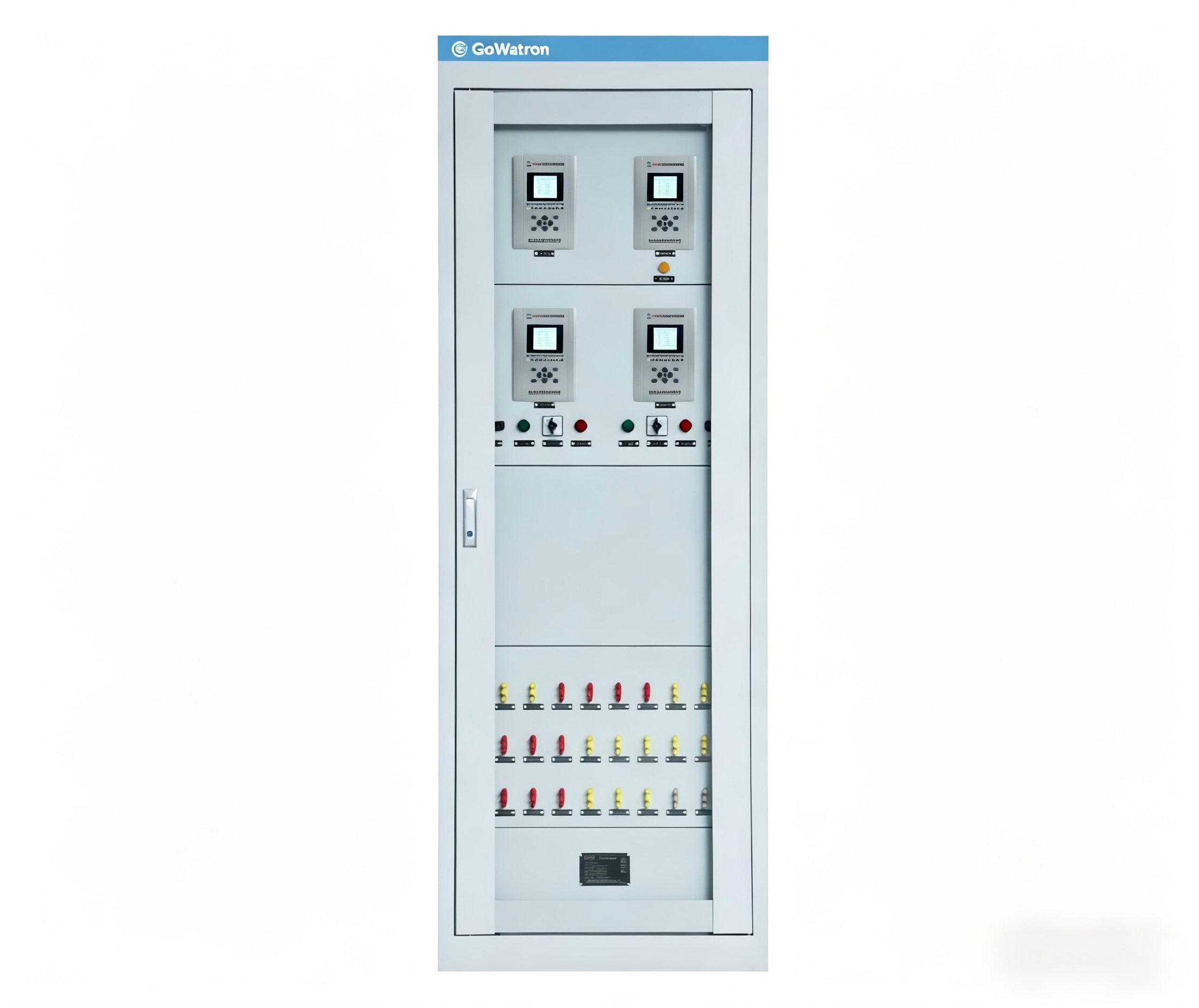
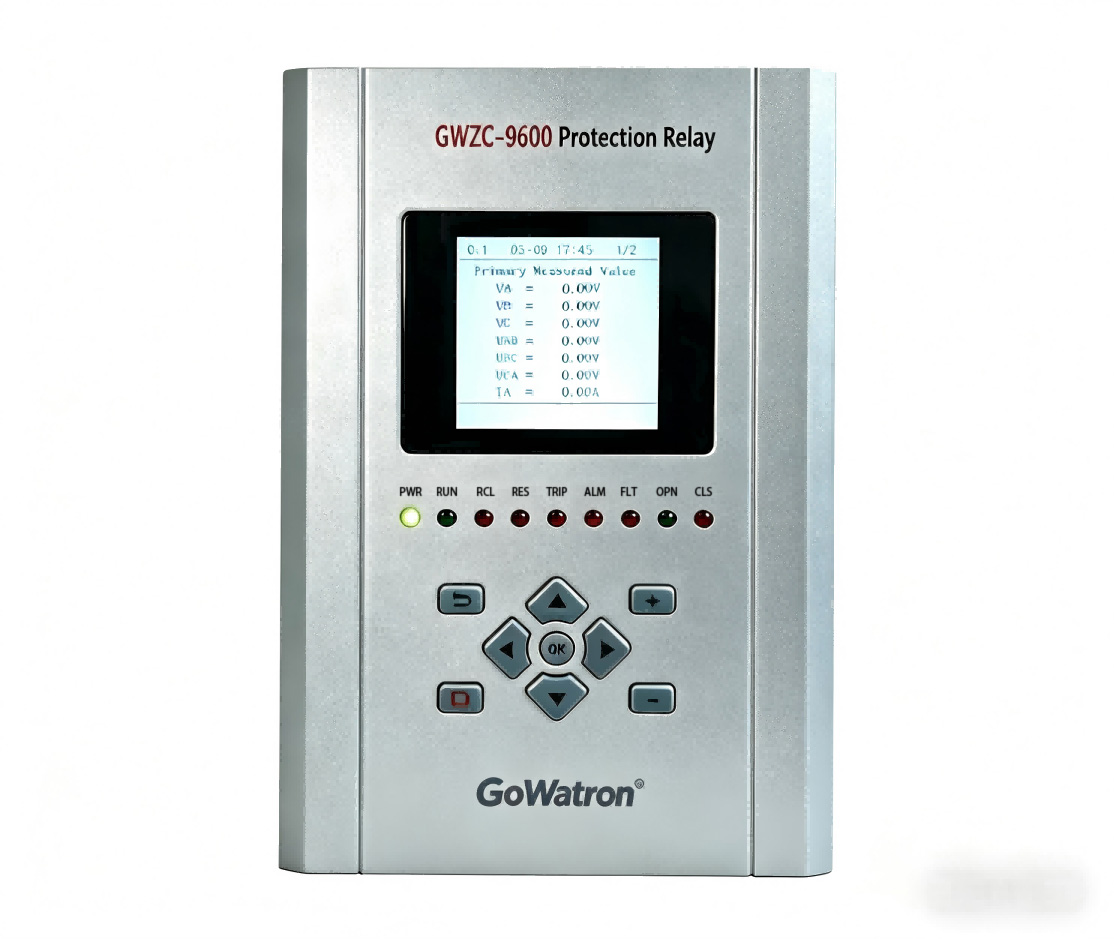
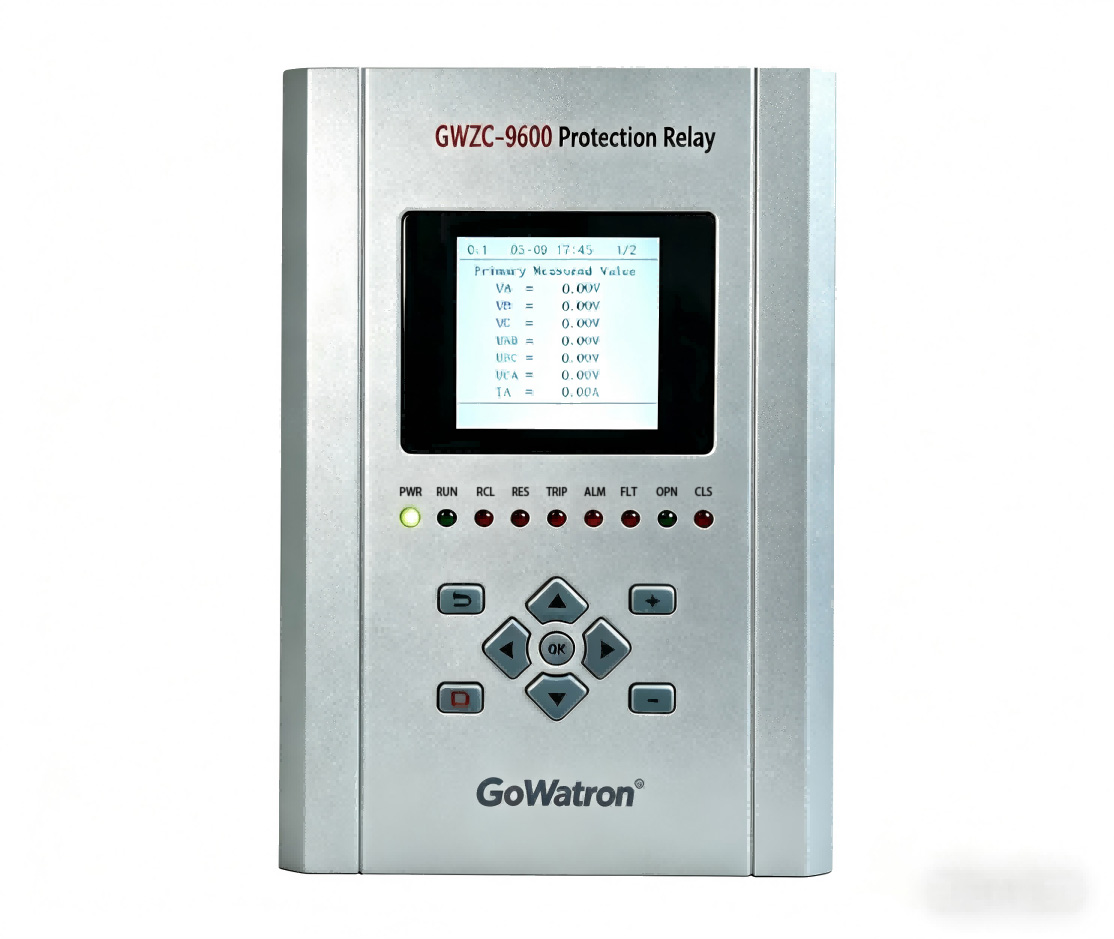
GWZC-9890L Low-Frequency Low-Voltage Load Shedding DeviceGWZC-9890L Low-Frequency Low-Voltage Load Shedding Device
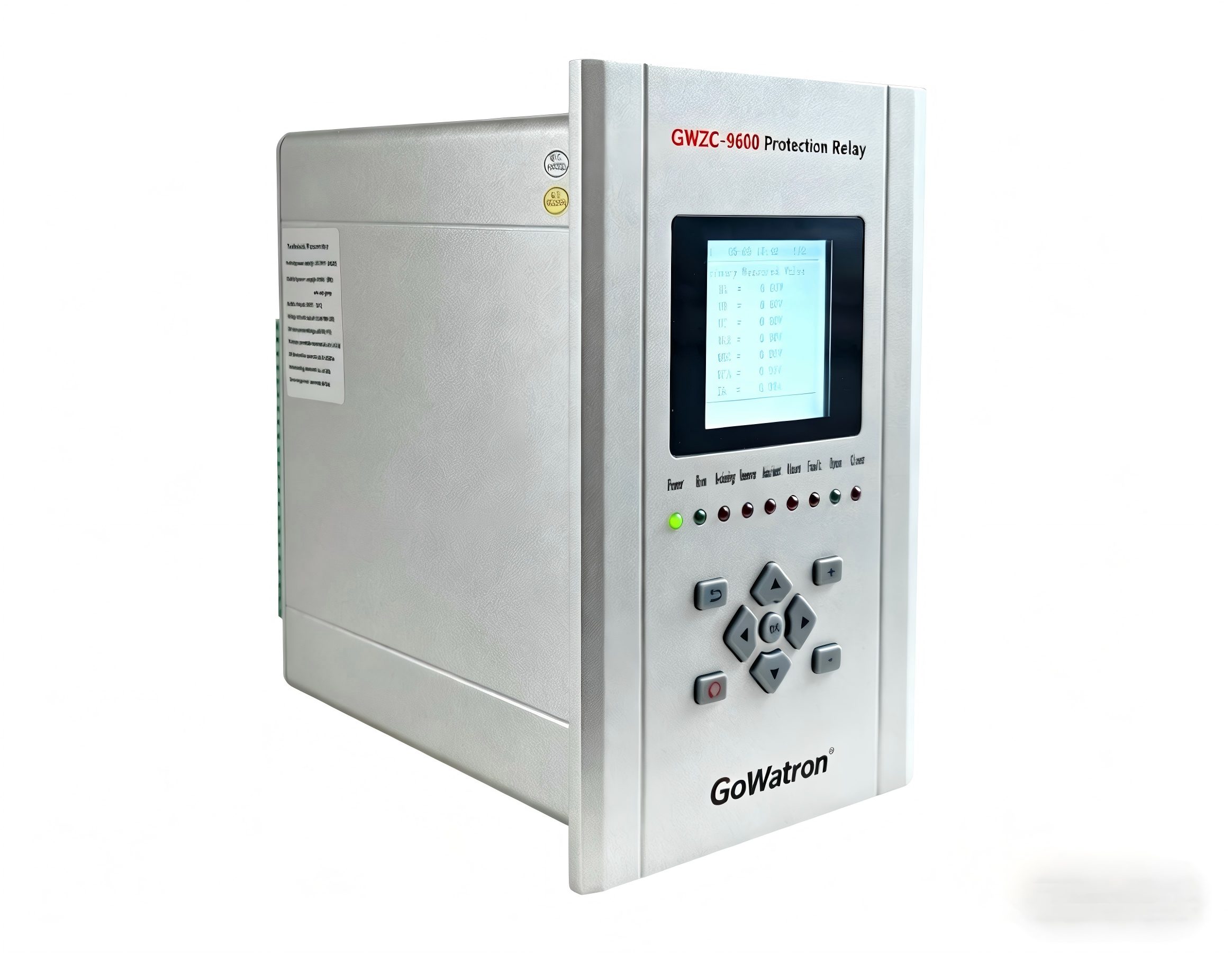
Low-Frequency Low-Voltage Load Shedding Device Side View
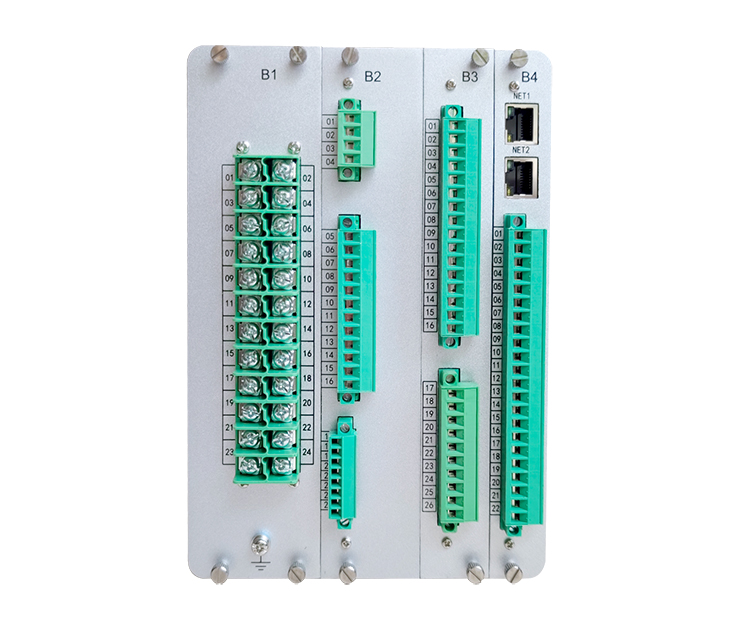
Low-Frequency Low-Voltage Load Shedding Device Rear View
GWZC-9890L Low-Frequency Low-Voltage Load Shedding DeviceGWZC-9890L Low-Frequency Low-Voltage Load Shedding Device
Low-Frequency Low-Voltage Load Shedding Device Side View
Low-Frequency Low-Voltage Load Shedding Device Rear View
GWZC-9890L Low-Frequency Low-Voltage Load Shedding Device
Applicable Scope:GWZC-9890L Underfrequency and Undervoltage Load Shedding (UFUVLS) device serves as an emergency protection measure for power systems. It automatically sheds partial loads to restore balance when grid frequency drops due to power deficit or voltage declines from reactive power deficiency, preventing frequency collapse or voltage instability while avoiding widespread blackouts. This device is particularly suitable for complex grids with high renewable energy penetration.
Product functions(ANSI):IEEE C37.2: ​27L1, 27L2, 27L3  | 59L1, 59L2, 59L3 | 81L1, 81L2, 81L3 | ​81O1, 81O2, 81O3
Communication functions:Supported Protocols:​​IEC 60870-5-103 (over Ethernet) | MODBUS RTU (via RS-485) | IEC 61850 (Ed.2 or Ed.1, as applicable)
​Interfaces:​​2× Ethernet Ports​ (IEEE 802.3 compliant, 10/100 Mbps) | 2× RS-485 Ports​ (ANSI/TIA-485-A standard, galvanically isolated)
Other functions: Support time synchronization via communication message, SNTP (Simple Network Time Protocol) time synchronization, and IRIG-B time synchronization. Support the dot matrix printing function with serial port communication. Support the fault recording function
Product Introduction Technical Parameter Size

Product Introduction:

          GWZC-9890L Underfrequency and Undervoltage Load Shedding (UFUVLS) device serves as an emergency protection measure for power systems. It automatically sheds partial loads to restore balance when grid frequency drops due to power deficit or voltage declines from reactive power deficiency, preventing frequency collapse or voltage instability while avoiding widespread blackouts. This device is particularly suitable for complex grids with high renewable energy penetration.

Product functions(ANSI):

Undervoltage Load Shedding ( ​27L1, 27L2, 27L3)
Overvoltage Load Shedding ( ​59L1, 59L2, 59L3)​
Underfrequency Load Shedding (81L1, 81L2, 81L3)
Overfrequency Load Shedding (81O1, 81O2, 81O3)
PT Fuse Failure Alarm (60)

Electrical Specifications​

​Power Supply:​​

● AC: 85-264V, 47-63Hz (≤15% THD)
● DC: 100-370V (≤5% ripple)

​Rated AC Parameters:​​

● Voltage: 100V/√3 or 100V
● Current: 5A/1A
● Frequency: 50Hz

​Overload Capacity:​​

● Current Circuit: 2×In continuous | 10×In (10s) | 40×In (1s)
● Voltage Circuit: 1.5×Un continuous

​Power Consumption:​​

● Supply: <10W (static), ≤15W (trip)
● Current Circuit: ≤1VA/phase (5A) / ≤0.5VA/phase (1A)
● Voltage Circuit: ≤0.5VA/phase

​Digital Output:​​

● Dry contact (8A@250VAC / 30VDC)
● Dielectric: 4kVAC (coil-contact), 1kVAC (open contact)
● Operating Time: 5ms (typ) / 8ms (max)
● Mechanical Life: 100k operations

Protection Performance​

​Operating Range:​​

● Voltage: 0.5-120V (phase)
● Current: 0.02-20×In
● Zero-Seq Current: 0.05-20A
● Frequency: 35-65Hz | Delay: 0-100s

​Accuracy:​​

● Voltage/Current: ±2.5% or ±0.1V/±0.05A (whichever greater)
● Frequency: ±0.01Hz
● Settings: ±2.5%

​Trip Time:​​

● Instantaneous: ≤35ms (≥1.2× setting)
● Time-Delayed: ≤1% of setting or 35ms

Measurement & Monitoring​

​Range:​​

● Voltage: 0.5-120V | Current: 0.02-1.2×In

​Accuracy:​​

● V/I: ±0.2% | Frequency: ±0.01Hz | Other: 0.5%
● Time Sync: ≤2ms | SOE: ≤1ms

​Event Recording:​​

● 128 protection trips/operations
● 32 self-tests/fault waveforms (COMTRADE)

Environmental & Mechanical​

​Operating Temp:​​

● Standard: -10°C to +55°C
● Extended: -40°C to +70°C*

​Storage Temp:​​ -40°C to +80°C
​Humidity:​​ 5-90% RH (non-condensing)
​Pressure:​​ 60-110 kPa
​Compliance:​​

● IEC 60255-21 (vibration/shock)
● IEC 61000-6 (EMC)

Related products More
GWZC-9890D Anti-islanding protection relay(AIP)
GWZC-9890D Anti-islanding protection relay
detail
GWZC-9790N Reverse Power Protection Relay (ANSI 32)
GWZC-9790N Reverse Power Protection Relay
detail
GWZC-9890J Fault Islanding Protection Device
detail
GWZC-9000 Sewage Treatment Automation Control System
detail
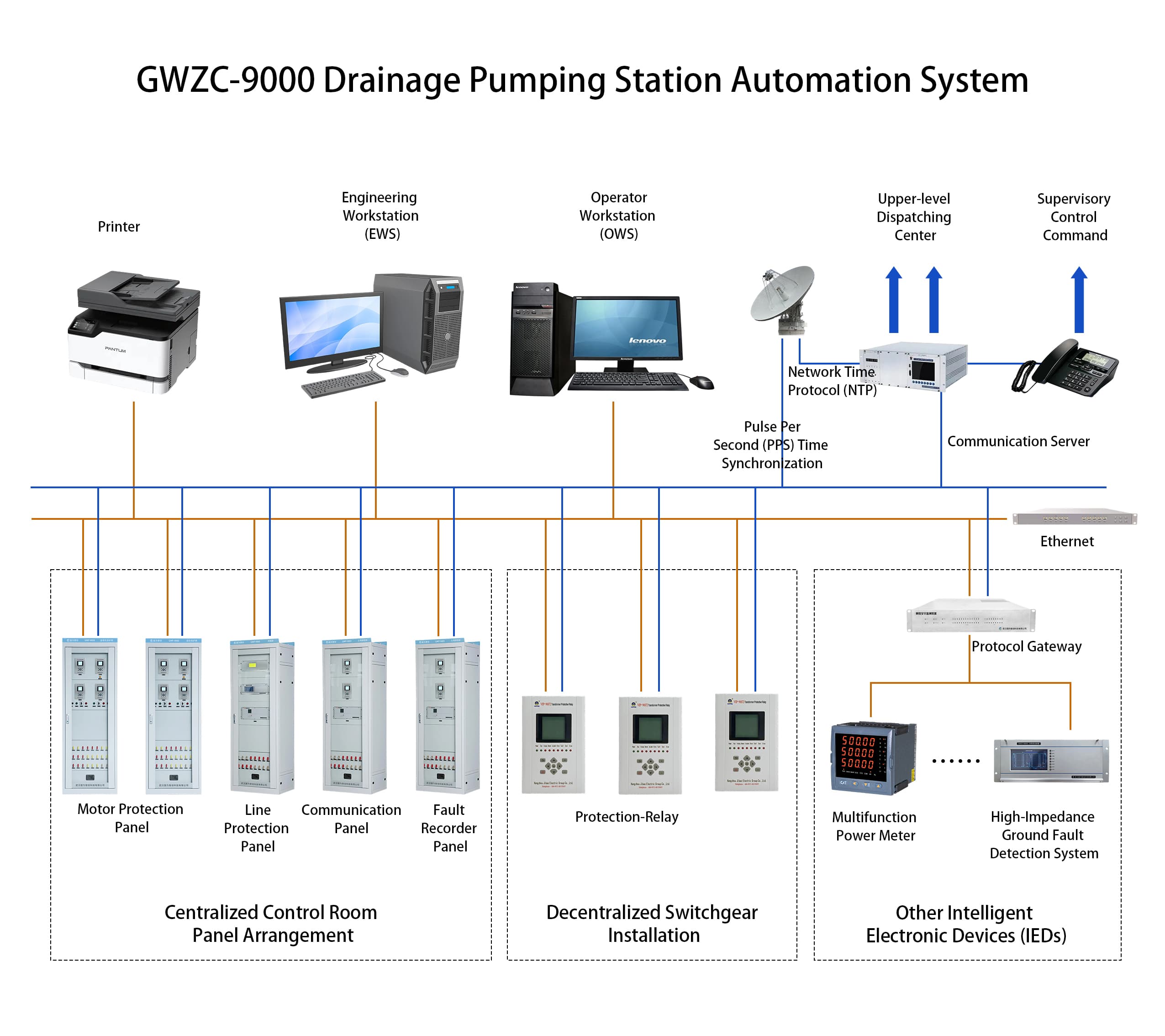
GWZC-9000 Drainage Pumping Station Automation System
detail
Technical Knowledge More
Automatic Transfer Switch (ATS) Side View
What is Parallel Operation
​Parallel operation​ involves connecting two or more independent AC power sources (e.g., generators, grids) to share electrical loads seamlessly. This process—synchronization—demands precise matching of voltage magnitude, frequency, and phase angles between systems before interconnection. Critical for grid expansion, backup power, and renewable integration, it enables redundant supply during failures.
2025/08/15
Generator-Transformer Differential Protection Relay Rear View
Ring-Closing Operation: Definition & Importance in Power Grids
A ring-closing operation involves closing a normally open switch within a closed-loop electrical network fed by a single power source. This creates parallel paths to redistribute loads without interruption, primarily for maintenance or network reconfiguration. Key prerequisites are voltage difference under 5%, phase angle alignment below 5 degrees, and pre-calculation of induced circulating currents to avoid equipment damage. Distinct from connecting independent systems, this procedure requires advanced monitoring but avoids synchronization complexity. Strict protocols using real-time sensors and simulations ensure safe execution, making it fundamental for resilient distribution networks like ring-main units (RMUs) in urban grids.
2025/08/14
Synchronism Check Function vs. Synchronizing Function: Roles, Differences, and Applications
This article compares the ​synchronism check function​ in line protection devices and the ​synchronizing function​ in dedicated synchronizing equipment. The ​synchronism check function​ serves as a safety interlock for circuit breaker closing operations, while the ​synchronizing function​ enables precise generator synchronization and critical tie-line interconnections with active parameter regulation. Explore core principles, application scenarios, and technical distinctions between these critical power system components.
2025/08/11
GWZC-9890L Low-Frequency Low-Voltage Load Shedding DeviceGWZC-9890L Low-Frequency Low-Voltage Load Shedding Device
Low-Frequency Low-Voltage Load Shedding Device Side View
Low-Frequency Low-Voltage Load Shedding Device Rear View
Inquiry Consultation
产品表单
Inquiry Consultation
+86-17621210051
+86-17621210051
+86-17621210051
+86-17621210051
home product email
live chat
my